

Freight claims are an inevitable part of trucking. If you haul enough loads, eventually something will go wrong — a shipment arrives damaged, short, delayed, or disputed. When that happens, the effects often ripple far beyond the freight itself.
A single freight claim can affect your revenue, delay payments, strain broker relationships, increase insurance costs, and disrupt cash flow. The difference between a manageable situation and a costly problem usually comes down to how quickly and effectively you respond in the first 24–72 hours.
What Is a Freight Claim?
A freight claim (also known as a cargo claim) is a formal request for compensation when freight is lost, damaged, short, or otherwise compromised during transit. Shippers, receivers, or brokers typically file these claims when the shipment does not arrive in the expected condition or quantity. Carriers commonly handle four main types of freight claims:
- Damage Claims — The freight arrives physically damaged or compromised.
- Shortage Claims — Part of the shipment is missing upon delivery.
- Loss Claims — The entire shipment is never delivered or is stolen.
- Concealed Damage Claims — Damage that is discovered after delivery and unpacking.
Who Is Responsible for a Freight Claim?
Most freight claims are governed by the Carmack Amendment, which generally places liability on the carrier for loss or damage that occurs while freight is in their possession. To establish liability, the claimant must typically demonstrate that the freight was tendered in good condition, that it arrived damaged or short, and that financial loss occurred as a result.
However, liability is not automatic. Carriers have several recognized defenses depending on the circumstances. These may include:
- Acts of God — such as severe weather events or natural disasters
- Shipper error — including improper packaging or loading
- Inherent vice — when the freight is naturally prone to damage or deterioration
- Improper loading or securement by the shipper
- Actions taken by public authorities — such as inspections, seizures, or regulatory orders
In practice, freight claim outcomes often come down to documentation. When records are clear and complete, liability becomes much easier to establish—or dispute. Declared value may also influence claim outcomes, but it does not replace proper cargo insurance coverage and should align with your policy limits.
What To Do Immediately After Receiving a Freight Claim
When a freight claim arrives, speed matters—but so does accuracy. The first 24–72 hours are critical for building your defense or preparing a resolution.
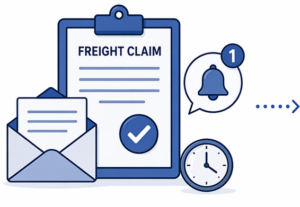
Step 1: Acknowledge the Claim Immediately
Even if you disagree with the claim, it should never be ignored. Acknowledging receipt within 24–48 hours demonstrates professionalism and helps the process move forward. Silence or delay can weaken your position later, even if you ultimately dispute the claim.
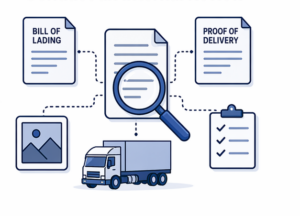
Step 2: Gather Documentation and Conduct an Internal Review.
Start by collecting all operational records related to the load, including the Bill of Lading, Proof of Delivery, pickup and delivery photos, driver notes, inspection reports, temperature logs (if applicable), and all communications with brokers, shippers, or receivers. At the same time, conduct a thorough internal review. Speak with the driver while the details are still fresh, carefully examine pickup and delivery conditions, and check for any signs of pre-existing damaged freight, improper packaging, or handling issues. Confirm whether exceptions were noted at delivery or if the receiver accepted the freight without remarks. Strong documentation combined with a clear internal review gives you the full picture of what actually happened. This preparation significantly strengthens your position and helps determine whether the issue occurred in transit or was beyond your control.
Step 3: Notify Your Insurance Provider
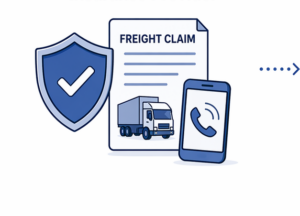
If the claim appears valid or could involve significant financial exposure, your cargo insurance provider should be notified promptly. Most policies require reporting within a short window—often 24 to 72 hours after awareness of the claim. Delaying this step can complicate or limit coverage, even if the claim is legitimate.
Step 4: Respond to the Claim
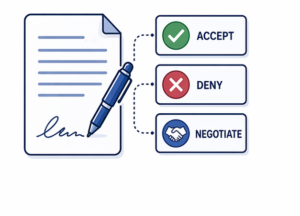
Once you have gathered facts and reviewed documentation, you can determine how to respond. Some claims will be accepted, others denied, and many will involve negotiation or settlement discussions. Regardless of outcome, your response should always be written, factual, and supported by evidence rather than assumptions or emotion.
Common Freight Claim Questions
Q: Can a Broker Withhold Payment Because of a Freight Claim?
A: It depends on both contractual terms and the specifics of the claim.
In some cases, brokers may delay payment, issue deductions, or attempt chargebacks when a freight claim is involved. This typically happens when liability is unclear or when supporting documentation is incomplete. In other situations, payment may proceed normally while the claim is investigated.
Q: Can You Dispute a Freight Claim?
A: Yes. Carriers and insurers routinely investigate and dispute when supporting evidence shows the claim may not be valid. Common grounds for disputing a claim include:
- Evidence shows the freight was improperly packaged by the shipper
- Damage existed prior to pickup
- The receiver accepted delivery without noting any exceptions or issues
- The claim was filed outside the required time limits
- The claim lacks proper documentation or supporting evidence
In some cases, freight is properly secured, delivered in good condition, and thoroughly documented—yet a claim is still submitted. When this occurs, disputing the claim is not only appropriate but necessary to protect your business from unwarranted liability or financial loss.
The most effective approach is to base every decision on clear, documented evidence rather than assumptions.
Q: How Do Freight Claims Affect Your Business?
A: The true cost of a freight claim extends far beyond the declared value of the damaged or missing freight. Direct costs may include claim payouts or insurance deductibles, but the indirect impact is often more significant.
Carriers frequently experience increased insurance premiums over time, administrative burden associated with processing the claim, lost productivity, strained broker relationships, and delayed or reduced payments. In many cases, the cash flow disruption created by a single claim can ripple across multiple weeks of operations.
Q: Can Freight Claims Impact Cash Flow?
A: Freight claims often create a hidden financial strain that carriers underestimate until it happens. While a claim is being reviewed or disputed, payments may be delayed, deductions may be applied, and insurance reimbursements can take time to process.
At the same time, operational expenses do not pause. Fuel, maintenance, insurance, payroll, and equipment costs continue regardless of whether a claim is resolved. This mismatch between incoming revenue and outgoing expenses is where cash flow pressure builds.
Maintaining steady working capital during these periods is critical to keeping trucks moving without disruption.
Keep Your Cash Flow Moving with Apex Capital
That’s exactly why steady working capital is essential, and where Apex Capital makes the difference. We provide fast, flexible freight factoring solutions built specifically for trucking companies and carriers. With reliable access to funds, you can cover fuel, payroll, maintenance, and other operating expenses. No more cash flow gaps or forced slowdowns.
Ready to protect your cash flow?
Get a free factoring quote from Apex Capital today and keep your trucks moving.
Disclaimer: This content is for informational purposes only and does not constitute legal or insurance advice. Always consult your insurance provider, legal counsel, or risk management professional for guidance specific to your situation.