

The freight industry has never been short on risk, but what has changed is the speed at which that risk can move through the ecosystem and the number of businesses it can affect.
Carriers are evaluating brokers; brokers are evaluating carriers; factoring companies are evaluating both; and shippers want greater confidence in the companies moving their freight. At the same time, technology is giving all of us access to more information than ever before.
That should make decisions easier, and sometimes it does. But more information does not automatically create more trust.
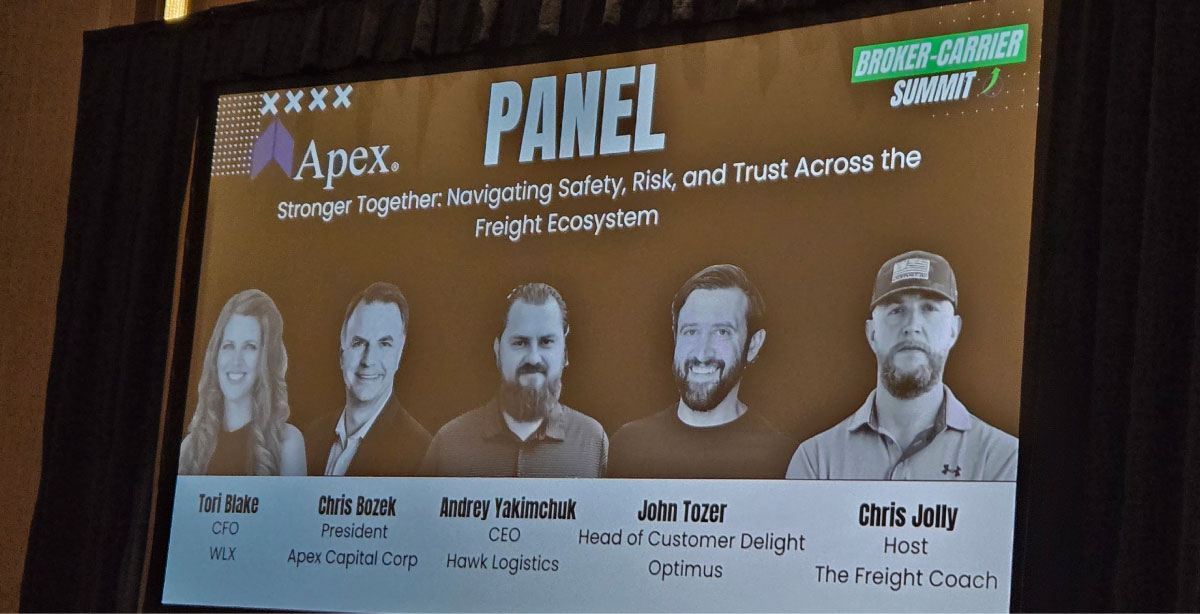
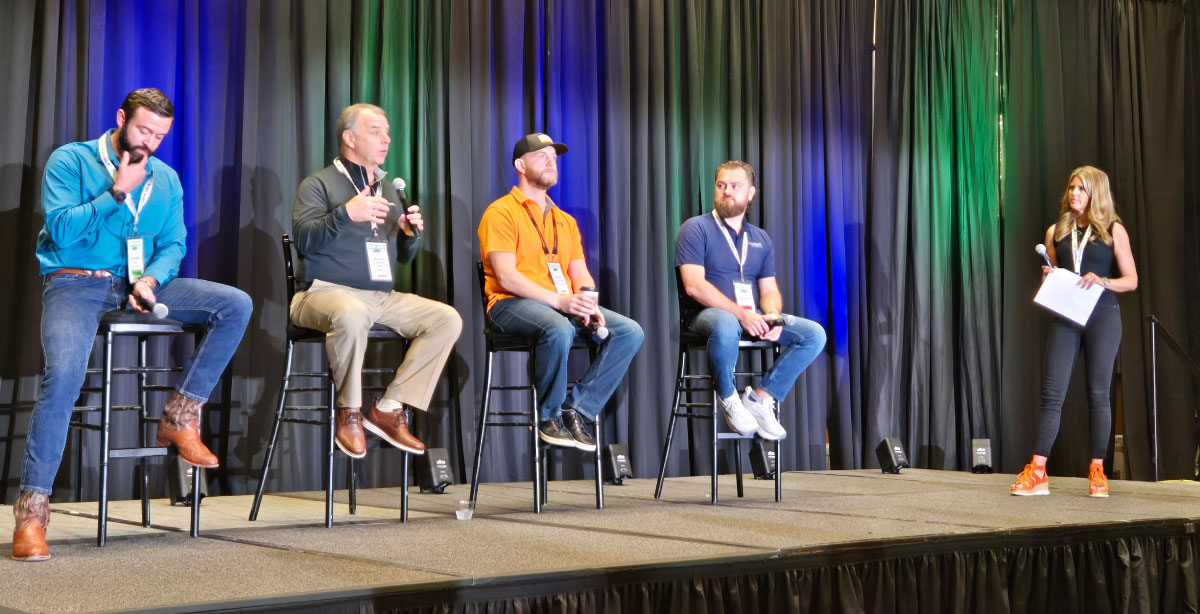
I recently participated in the “Stronger Together: Navigating Safety, Risk, and Trust Across the Freight Ecosystem” panel, sponsored by Apex Capital, at the Broker Carrier Summit in Dallas. The discussion brought together leaders with different perspectives from across the freight ecosystem, but a common theme emerged. Managing risk cannot happen in isolation. It requires strong relationships, shared information, and open communication, especially when challenges arise. Working together can lead to better decisions and a stronger industry.
Risk Doesn’t Stay in One Lane
When something goes wrong in freight, the impact rarely stops with one company. A carrier experiencing financial stress can affect its drivers, brokers, shippers, and financial partners. A broker facing financial trouble can create problems for carriers that have already hauled its freight. Fraud or a stolen load can affect nearly everyone involved in the transaction.
That interconnectedness means we have to stop thinking about risk as someone else’s problem.
From our perspective in factoring, we see tens of thousands of freight transactions every day. We see payment behavior, disputes, documentation, and changes in customer patterns. Brokers, carriers, trucking insurance providers, and technology companies each see different parts of that same picture.
Individually, those perspectives are incomplete. When we communicate and share what we know, we all become much more powerful. Stronger information and stronger relationships can lead to better decisions for everyone involved.
Technology Is a Tool, Not the Relationship
There are more tools available today to evaluate carriers and counterparties than at any other point in our industry’s history. Companies can use safety information, identity verification, broker credit check data, carrier history, and other signals to make more informed decisions.
Those tools should absolutely be part of risk management, but no platform can completely replace judgment, accountability, or a conversation.
A data point can indicate that something changed, but it may not explain why. An alert can identify potential risk, but it cannot always distinguish a temporary issue from something more serious. Sometimes the most important risk management tool is still the phone.
My years in banking taught me that markets can move very quickly when confidence disappears, and freight is no different. If everyone reacts to the same signal without asking questions, a concern can quickly become a larger problem. Credit gets reduced, freight stops moving, and cash flow tightens.
Sometimes the right decision is to walk away. Good risk management, however, isn’t simply about finding reasons to say no. It is about gathering enough information to make a responsible decision.
Build the Relationship Before You Need It
One principle I emphasize with our team is not to wait until something goes wrong to start communicating.
Understand how your partners operate, learn what matters to their businesses, and make sure they understand what matters to yours. When a problem eventually comes up, you already have a foundation of trust.
Strong relationships don’t eliminate difficult conversations. They make those conversations more productive. A good partner answers the phone, is honest about what happened, and works to determine what can reasonably be done next.
That becomes especially important during periods of financial stress. Walking away may be necessary sometimes, but it shouldn’t always be the first response. When circumstances allow, the better question is whether there is a responsible way to work through the problem together.
Sometimes there won’t be. Sometimes there will. You only find out by having the conversation.
Trust Has to Move in Both Directions
Much of the industry’s conversation around risk has historically focused on vetting carriers, but trust has to move in both directions. Carriers also need to understand the companies they’re doing business with. They need accurate information, transparent contracts with clear terms, financial transparency, and communication when circumstances change.
We can’t expect transparency from others if we aren’t willing to provide it ourselves. The same is true for communication, accountability, and honoring commitments.
There will always be bad actors, and no technology or vetting process will eliminate them completely. What we can do is make it easier for the good actors to find one another and recognize the people and companies doing business the right way.
When a carrier consistently performs and communicates well, look for opportunities to continue working with them. When a broker treats carriers fairly, recognize it. When someone goes out of their way to solve a problem, make sure their organization knows about it.
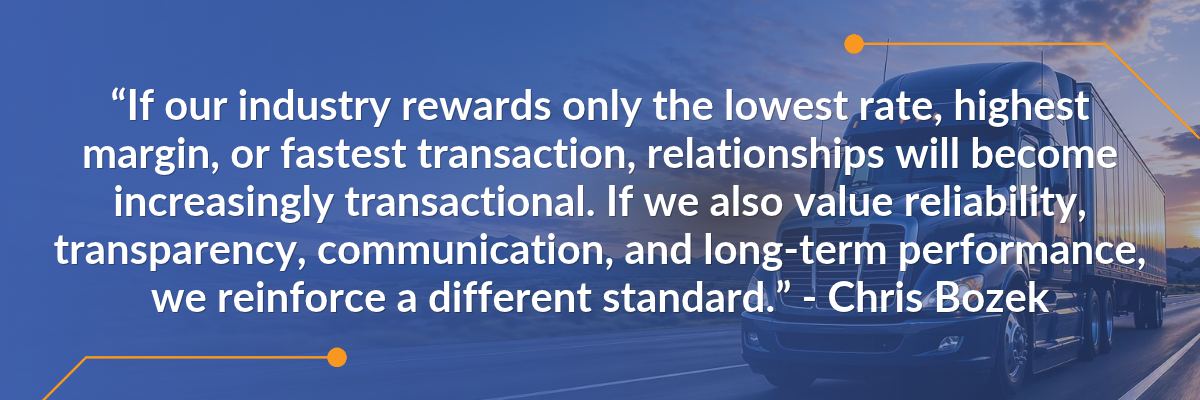
If our industry rewards only the lowest rate, highest margin, or fastest transaction, relationships will become increasingly transactional. If we also value reliability, transparency, communication, and long-term performance, we reinforce a different standard.
Stronger Relationships Create Stronger Businesses
Freight is competitive. Every company has financial goals, customers to serve, and difficult decisions to make. Relationships don’t replace sound business judgment. They improve it.
Technology can help us identify risks. Data can help us ask better questions. Processes can help us make more consistent decisions. But when a situation becomes complicated, the relationships we have built based on mutual respect often determine how effectively we respond.
To me, a good partner is someone who is in it for the long haul. They communicate and proactively engage. When a problem arises, they work toward a solution instead of disappearing. They run toward the fire.
If more of us approach our business relationships that way, we don’t just reduce risk for our own organizations. We strengthen the freight ecosystem.
And in an industry as interconnected as ours, being stronger together is good business for everyone.
Ready to see how stronger relationships and better information can work together for your business? Learn more about Apex freight factoring and how we help carriers get paid fast while keeping the lines of communication open.
Talk to an Expert
Written by: Chris Bozek, President of Apex Capital